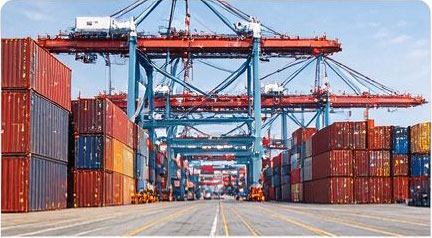
How to ensure your products meet quality standards before shipment.
For importers sourcing from China, quality problems are most expensive when they are discovered after the container has sailed. At that point, replacement, rework, air freight, and customer complaints all become your problem—often across an ocean and several time zones.
The good news is that most shipment quality failures are predictable. They usually come from unclear specifications, skipped approval steps, weak in-process checks, or a final inspection that happens too late to fix anything. A disciplined quality inspection process does not guarantee perfection, but it dramatically reduces the chance of receiving goods that do not match what you ordered.
Below are practical quality inspection tips for importers, especially when working with suppliers in China.
1. Lock down the specification before production starts
A quality inspection can only measure against a standard. If the standard is vague, the inspection is subjective. Before production, confirm the product specification in writing: material, dimensions, tolerance, color, finish, function, packaging, labeling, and any applicable test standard.
Make sure the supplier has:
- A signed specification sheet or technical drawing
- Approved color, material, or finish samples
- Clear packaging and labeling requirements
- A written acceptance criteria for defects
- The correct product version and model number
Why it matters: Many “quality disputes” are actually specification disputes. If the requirement was never written down, it is difficult to enforce later.
2. Approve a golden sample or pre-production sample
Ask the supplier to produce a pre-production sample using the same materials, process, and equipment as mass production. Review it carefully, document any changes, and sign it off as the reference standard.
Keep the approved sample in a safe place—ideally one with the supplier and one with you or your local representative. Photograph it from multiple angles and record key measurements.
Why it matters: A golden sample turns abstract specifications into a physical reference. It also gives the inspector something concrete to compare against during final inspection.
3. Hold a pre-production meeting
Before mass production begins, confirm the production plan, key process steps, critical quality points, inspection stages, and responsibilities. For complex products, ask the supplier to explain how they will control the most risk-prone parts of the process.
Clarify:
- Who is responsible for in-process inspection?
- At what stages will checks happen?
- What happens when a defect is found?
- Who approves rework or deviation?
- When will the goods be ready for final inspection?
Why it matters: Quality is built into the process. A pre-production meeting aligns expectations before mistakes become expensive.
4. Check incoming materials and components
Quality problems often start with what goes into the product. Ask how the factory controls raw materials, components, and sub-suppliers. Where relevant, review incoming inspection records, material certificates, and traceability.
Pay attention to:
- Material grade and source
- Consistency with the approved sample
- Storage conditions
- Handling of non-conforming materials
- Sub-supplier changes without approval
Why it matters: If the factory cannot control incoming materials, it cannot reliably control the finished product.
5. Use a clear AQL and defect classification
For many consumer and industrial products, final inspection uses an acceptance sampling standard such as ISO 2859-1 (often referred to as AQL). Agree in advance on:
- Inspection level and sample size
- Acceptable quality limit
- Critical, major, and minor defect definitions
- What constitutes a failure of the whole lot
Do not rely on “we will check carefully.” Define what “carefully” means in measurable terms.
Why it matters: A clear AQL and defect classification make the inspection objective and give both buyer and supplier a shared basis for acceptance or rejection.
6. Inspect during production, not only at the end
Final inspection is necessary, but it is not enough. By the time final inspection happens, the factory may have already produced thousands of units with the same defect. Build in in-process checks at key stages: after material preparation, after assembly, after finishing, and before packing.
For higher-risk products, consider a during-production inspection (DUPRO) in addition to pre-shipment inspection.
Why it matters: Early detection allows correction before the defect is repeated across the whole order.
7. Conduct a thorough pre-shipment inspection
A pre-shipment inspection (PSI) should happen when production is complete and goods are packed, but before they are loaded. The inspector should check quantity, workmanship, function, dimensions, labeling, packaging, and carton condition against the approved specification and sample.
A good PSI report should include:
- Inspection date and location
- Sample size and AQL used
- Defect descriptions with photos
- Measurements and functional test results
- Packaging and shipping mark checks
- Clear pass, fail, or pending decision
Why it matters: A well-documented PSI gives you evidence to accept, reject, or require rework before shipment—not after.
8. Test where testing matters
Some quality risks cannot be confirmed by visual inspection alone. Depending on the product and market, arrange laboratory testing for performance, safety, material composition, or regulatory compliance.
Typical examples include:
- Electrical safety and performance
- Chemical content and restricted substances
- Food-contact material testing
- Textile colorfastness and fiber content
- Toy safety requirements
- Packaging and transport testing
Why it matters: Visual inspection confirms appearance and workmanship. Testing confirms whether the product meets the technical and regulatory requirements of your market.
9. Check packaging, labeling, and shipping marks
Quality is not only the product itself. Check the packaging method, inner and outer cartons, labels, barcodes, warnings, language requirements, and shipping marks. Confirm that the packaging protects the product during transport and meets your destination market requirements.
Check:
- Carton strength and drop-test results where relevant
- Label content and placement
- Barcode readability
- Product and carton quantity
- Shipping marks and destination details
Why it matters: Poor packaging and labeling can cause damage, customs delays, or rejection by your customers—even when the product itself is fine.
10. Close out corrective actions before shipment
If the inspection finds defects, do not rely on verbal promises. Agree on a corrective action plan with responsible persons, deadlines, and evidence requirements. For serious issues, re-inspect after rework.
Confirm:
- What exactly will be corrected
- Who is responsible
- What evidence will be provided
- Whether a re-inspection is required
- When the shipment will be released
Why it matters: An inspection report is only useful if it leads to action. A clear corrective action process prevents the same defects from returning on the next order.
11. Consider a container loading check
For higher-value or higher-risk shipments, a container loading check can confirm that the inspected goods are the goods actually loaded, and that loading is done properly.
Check:
- Quantity and carton count
- Product consistency with the inspected lot
- Container condition
- Loading method and damage prevention
- Seal number and photos
Why it matters: It closes the gap between “passed inspection” and “actually shipped.”
Final thought
Quality inspection is not a single event at the end of production. It is a chain: clear specifications, approved samples, in-process checks, objective final inspection, testing where needed, packaging verification, and corrective action before shipment.
If you need local support in China, SIGNI can help overseas importers coordinate factory audits, pre-shipment inspections, during-production checks, container loading supervision, supplier communication, and export documentation follow-up. Having reliable local eyes on the ground helps you catch problems before the container leaves—and before they become your customer’s problem.
Define the standard, inspect early, document the evidence, and release the shipment only when the facts support it.