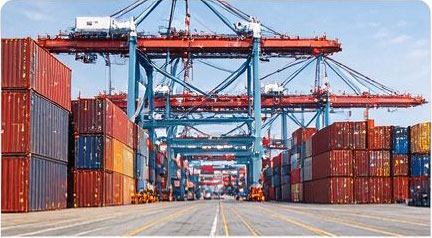
A beginner‘s guide to export documentation and clearance.
Exporting from China is not simply a matter of handing goods to a forwarder and waiting for a boat. Every shipment passes through a formal customs process, and that process is built on documents, classification, regulatory status, and declared facts. When those line up, cargo moves. When they do not, it sits — and the exporter, not the forwarder, carries the consequences.
For overseas buyers and their China-based teams, understanding the basics of China export customs is a risk-management exercise. You do not need to become a licensed customs broker. You do need to know what the process expects, where errors typically occur, and which parts of the process your supplier or local partner is actually responsible for.
Export clearance starts before the cargo reaches the port
A common misconception is that customs “begins” when the container arrives at the terminal. In practice, the work that determines whether clearance succeeds starts much earlier: when the product, transaction, exporter, cargo-ready date, and transport plan are known. Classification, declaration-element review, license checks, and document preparation all need time. Waiting until the container is loaded leaves little room to resolve discrepancies — and for regulated products, late discovery can mean additional certificates, testing, or a changed shipping plan.
This is why an experienced export operation treats documentation as a production task, not a shipping task.
The core document set: what every export shipment needs
For ordinary goods, China export declarations rest on a core set of documents. The exact list can vary by product and trade mode, but the baseline is consistent:
Commercial invoice — the central value document. It must show buyer and seller, goods description, quantity, unit price, total value, currency, trade term, and origin. The declared value should reflect the genuine transaction and match supporting records.
Packing list — package count, package type, net weight, gross weight, volume, and marks. These figures should match what is actually delivered to the warehouse or loaded into the container.
Sales contract or order confirmation — the commercial basis for the shipment.
Customs declaration form — submitted electronically through the China International Trade Single Window.
Electronic customs power of attorney — if a broker or agent files on the exporter’s behalf.
For goods under special regulation, additional documents may be required: export licenses, inspection certificates, origin certificates, or product-specific approvals. The critical principle running through all of them is consistency: invoice, packing list, contract, declaration, and the actual cargo should tell the same story. Inconsistent documents are among the most common causes of delay and penalties in China export clearance.
HS classification is not a formality
The Harmonized System code determines declaration requirements, destination duty treatment, whether a license or certificate applies, and how the shipment is statistically recorded. A code used on an earlier shipment may be a useful reference, but it should not be copied without checking whether the product, specification, or trade arrangement is the same.
Misclassification is one of the most consequential errors in China export practice. It can lead to a rejected declaration, a document amendment, inspection, or — for sensitive goods — penalties. The practical takeaway for buyers is straightforward: ask the supplier how the HS code was determined, and be skeptical of codes that were “looked up online” without reference to the product’s material, function, and specifications.
Product descriptions must survive regulatory review
Customs descriptions should identify the actual goods. General wording such as “equipment,” “parts,” “accessories,” “plastic goods,” or “samples” is often insufficient for classification and regulatory review. Depending on the product, the declaration may need material, function, use, model, specification, brand, composition, or manufacturing details.
This is not only a customs issue. Vague descriptions can also create problems at destination, where the importing customs authority may apply a different interpretation. The description used on the commercial invoice, packing list, booking, and declaration should be consistent and specific enough to support both export and import review.
Inspection and quarantine (CIQ): not every shipment, but never guess
China’s export inspection and quarantine regime — still commonly referred to as CIQ — governs whether certain goods must be inspected before export. Since the 2018 institutional reform, these functions sit within the General Administration of Customs (GACC), though the CIQ certificate format and brand have been retained.
Whether a shipment triggers inspection depends primarily on the product’s regulatory status. A practical first check is the HS code’s supervision condition: a condition indicating export inspection means the goods are subject to mandatory inspection; a condition applying only to imports does not trigger export inspection. For chemicals, dangerous goods, food-contact materials, cosmetics, toys, and certain electronics, additional checks may apply regardless of the HS code.
When CIQ applies, the inspection result becomes part of the export documentation package and can affect destination clearance. A shipment that requires inspection but proceeds without it cannot be declared and released — there is no waiver for missing statutory inspection.
Export licenses and controlled items
Not all exports are unrestricted. China maintains an export licensing regime for controlled items, including dual-use goods, certain chemicals, strategic materials, and specified technologies. The 2026 dual-use export control catalogue covers six broad categories, including nuclear, chemical and biological, missile and aerospace propulsion, precision manufacturing equipment, semiconductors and strategic materials, and unmanned aerial vehicles.
If a product may fall within a controlled category, the exporter must determine the licensing position before booking or loading. In some cases, customs may issue a dual-use export control inquiry notice, requiring the shipper to provide the export contract, invoice, transport documents, technical characteristics, planned overseas use, and any testing reports within a specified period. For buyers and suppliers alike, the practical rule is simple: if there is any question about whether a license applies, resolve it before the cargo is committed to a sailing.
The declaration itself: Single Window and the “three consistencies”
China’s export declarations are overwhelmingly filed electronically through the China International Trade Single Window. The exporter or its authorized broker enters the declaration data, uploads supporting documents, and submits for customs review. The system may clear automatically or select the shipment for human review or inspection.
The governing discipline is often summarized as “three consistencies”: documents consistent with each other, documents consistent with the declaration, and declaration consistent with the actual cargo. A declaration that satisfies the system on paper but conflicts with the goods on the floor will not survive inspection. This is why experienced exporters lock down product data — description, specifications, material, quantity, weight, value — before the declaration is filed, not after.
Who is actually responsible?
A frequent source of confusion in China export transactions is the allocation of customs responsibility under Incoterms. Under FOB, the seller is responsible for export customs clearance and delivering the goods on board; the buyer arranges main carriage and import clearance. Under DDP, the seller handles both export and import clearance, including duties at destination. Under EXW, the buyer is nominally responsible for export clearance, but in practice the seller is often better placed to handle it because the export declaration must be filed by a Chinese-registered entity or its authorized agent.
The critical point for overseas buyers is this: regardless of the Incoterm, the Chinese exporter is the party that files the export declaration and bears primary responsibility for its accuracy. A forwarder can prepare documents and submit data, but the exporter remains accountable for what is declared. Buyers should therefore confirm not only who pays for clearance, but who controls the underlying data.
Where delays actually come from
Most China export clearance delays are avoidable. The recurring causes are consistent: inconsistent invoice and packing-list data, incorrect HS codes, vague product descriptions, missing inspection or license documents, spelling errors in consignee or port names, and declarations filed too close to the carrier cut-off. A confirmed booking does not guarantee departure if the declaration data is incomplete or the documents conflict.
The practical defense is preparation: give the broker complete and final data early, reconcile documents before submission, and build in time for inspection or amendment. Customs clearance is not a step to optimize at the last minute.
How SIGNI can help
SIGNI supports overseas clients with the China-side execution that export clearance depends on: verifying supplier and factory documentation before shipment, coordinating product information and HS classification inputs, liaising with local customs brokers, tracking inspection and licensing requirements, and acting as local eyes and hands when a shipment needs follow-up on the ground. If you are sourcing from China and want the export process checked before the container is committed, SIGNI can help you close the gap between what the supplier says and what the declaration requires.
Understand the documents, confirm the classification, resolve the regulatory status, and file on time — that is the core of China export customs.